
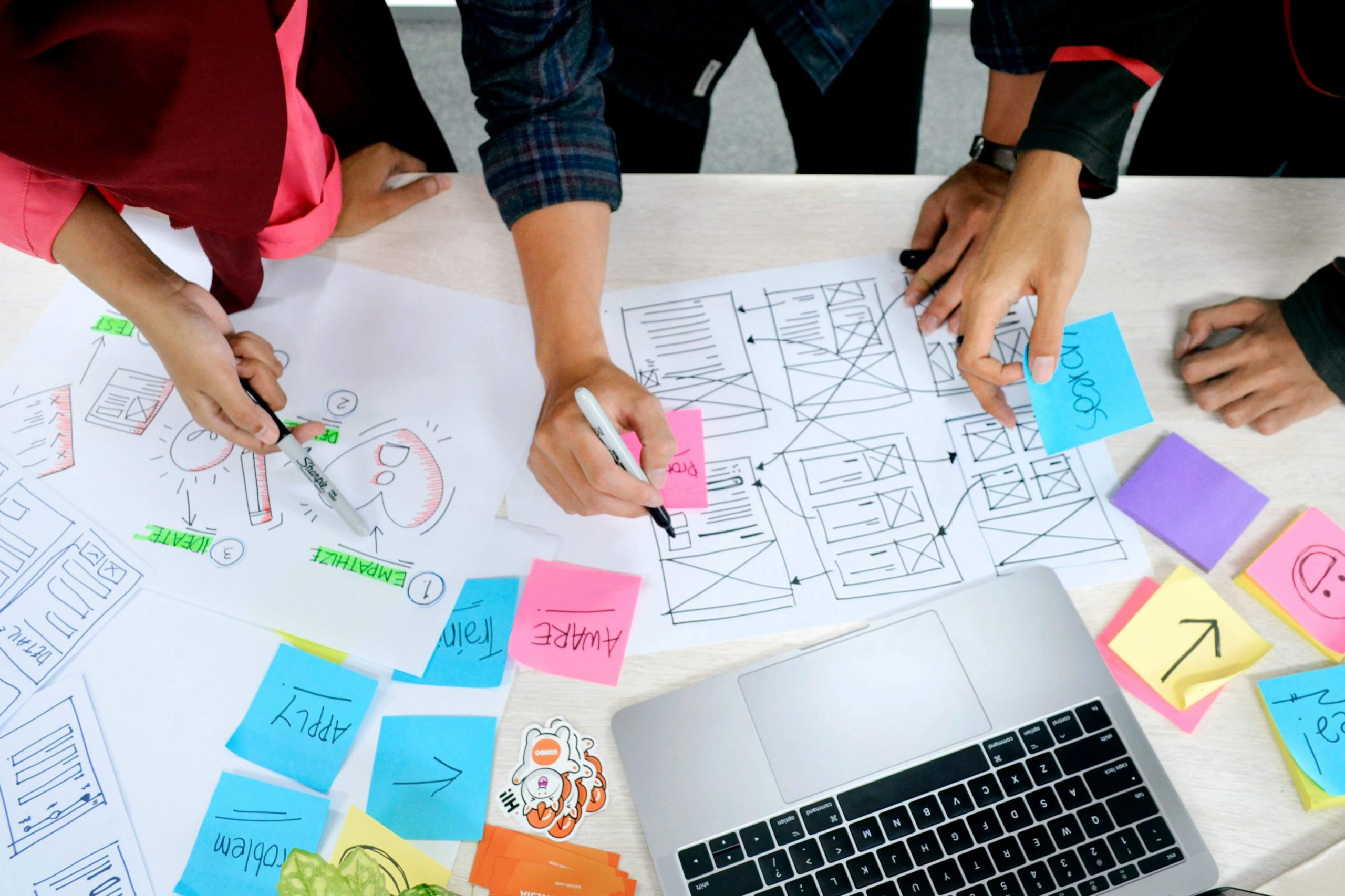
UX design for subscription based SaaS products is not about aesthetics or delight. After eleven years designing and scaling SaaS products across B2B platforms, I can say this clearly. UX in SaaS is about sustained usability under real operational pressure. If the experience does not hold up week after week, users disengage quietly and churn follows.
Subscription products are judged continuously. Users reassess value every billing cycle. That makes UX the most exposed layer of the product. It is where strategy either holds or collapses.
Why SaaS UX Design Operates Under Different Constraints
In subscription based SaaS, UX does not end at task completion. It must support repetition, efficiency, and trust over time. Users are not asking whether the product works once. They are asking whether it deserves a permanent place in their workflow.
Over the years, I have seen products with strong engineering fail because the UX assumed curiosity instead of obligation. In reality, most SaaS users are not exploring. They are trying to get through their work with minimal friction.
That is why SaaS UX design must be resilient, predictable, and opinionated. Ambiguity costs retention.
B2B SaaS UX Requires Respect for Cognitive Load
B2B SaaS UX design carries a different responsibility than consumer products. Most B2B users are operating under deadlines, accountability, and performance pressure. They are not there to explore. They are there to execute.
In my experience, B2B SaaS UX fails most often when it prioritizes surface level clarity over workflow reality. Clean interfaces do not matter if the product forces unnecessary steps or breaks mental flow.
Good B2B UX feels almost invisible. It aligns with how users already think about their work. When that alignment exists, adoption happens naturally. When it does not, no amount of onboarding fixes it.
SaaS Onboarding UX Is About Reducing Risk, Not Teaching Features
Onboarding UX is often misunderstood. Its purpose is not to explain the product. Its purpose is to reduce early stage uncertainty.
From years of observing user behavior, the biggest drop off happens when users do not know whether they are doing the right thing. Confusion during onboarding feels like risk. Users disengage rather than ask for help.
Effective SaaS onboarding UX focuses on one outcome and removes everything else. It gives users a clear sense of progress and confirms success explicitly. When onboarding tries to introduce breadth too early, it fails.
Onboarding should not feel like orientation. It should feel like momentum.
Time to First Value Is the Most Critical UX Metric
There is one metric that consistently predicts retention better than almost anything else. Time to first value.
Users who experience meaningful value early form a mental contract with the product. Users who do not rarely recover.
As a senior UX designer, I prioritize reducing time to first value above feature exposure, animations, or customization. If users cannot reach value quickly, the rest of the experience becomes irrelevant.
This often requires removing options rather than adding them. Constraint is not a limitation. It is a design tool.
SaaS Dashboard Design Is About Decision Support, Not Information Density
Dashboards are where UX debt accumulates fastest. I have redesigned many dashboards that failed not because of missing data, but because of missing intent.
A SaaS dashboard should help users decide what to do next. If it does not, it is noise.
Over time, dashboards tend to grow uncontrollably as teams add metrics without removing old ones. This creates cognitive overload and dilutes clarity.
Strong SaaS dashboard design prioritizes hierarchy, relevance, and actionability. It reflects how users make decisions, not how systems store data.
When dashboards try to serve every role equally, they serve no one well.
Progressive Complexity Is Essential for Long Term SaaS UX
One of the most overlooked principles in SaaS UX is progressive complexity. Users change. Their needs evolve. Their tolerance for abstraction increases.
New users need guidance and reassurance. Experienced users need speed and control. Designing a static interface for both inevitably fails one group.
In mature SaaS products, the UX adapts subtly over time. Controls become denser. Shortcuts emerge. Guidance recedes. This evolution is rarely discussed, but it is essential for retention at scale.
UX that does not evolve with users becomes friction.
Measuring UX Through Behavior, Not Opinion
UX is often judged subjectively, which weakens its influence. In practice, UX quality reveals itself through behavior.
I rely on signals such as activation drop off points, repeated task failures, hesitation patterns, and abandonment moments. These behaviors show where the experience breaks down.
If users avoid a feature that leadership believes is critical, the issue is rarely motivation. It is usually UX clarity or cognitive cost.
Designers must look beyond satisfaction surveys and focus on behavioral evidence.
Common SaaS UX Failures After Years in the Field
There are patterns I see repeatedly across products and industries.
Teams design UX to support sales demos rather than real usage.
Interfaces become bloated to appear powerful.
Onboarding is treated as a one time experience instead of a gradual process.
Post activation UX receives little attention.
Design decisions are driven by internal assumptions rather than observed behavior.
These failures accumulate slowly, then show up suddenly as churn.
“User-centred design is a method of turning ideas into value, of linking creativity and innovation and achieving outcomes that are good for business, people and the planet.”
Mike Anderson
Managing Director, Bentocase
Improving SaaS UX Without Rebuilding Everything
Large redesigns are rarely necessary. Most UX improvements come from simplification, not reinvention.
Reducing steps in core workflows.
Clarifying system feedback.
Making success visible.
Removing features that distract more than they help.
UX maturity is built through restraint.
Final Perspective After Eleven Years in SaaS UX
After more than a decade working in SaaS UX and UI, one truth stands out.
In subscription based products, UX is not a supporting function. It is the mechanism through which value is continuously proven.
If users struggle, hesitate, or second guess themselves, the experience is failing regardless of feature depth.
Strong SaaS UX feels calm, confident, and predictable. It respects user time and mental energy. And it quietly earns renewal without asking for it.
That is the standard worth designing for.
